EU-funded project strengthens WASH services at health facilities in Lower Juba

The Somalia Humanitarian Integrated Project II (SHIP II) is strengthening water, sanitation and hygiene services at three health facilities in Afmadow and Dhobley, helping create safer environments for patients, caregivers and health workers.
Funded by European Union Humanitarian Aid, SHIP II delivers integrated health, nutrition and WASH assistance to communities affected by conflict, displacement, drought and other climatic shocks in Somalia.
The project is implemented by a consortium led by World Vision International. World Vision provides technical leadership for health and nutrition, while Oxfam leads the WASH component. The consortium works with ZAMZAM Foundation, GREDO and WASDA, in coordination with Somalia’s Federal and State Ministries of Health.
Improving essential WASH services
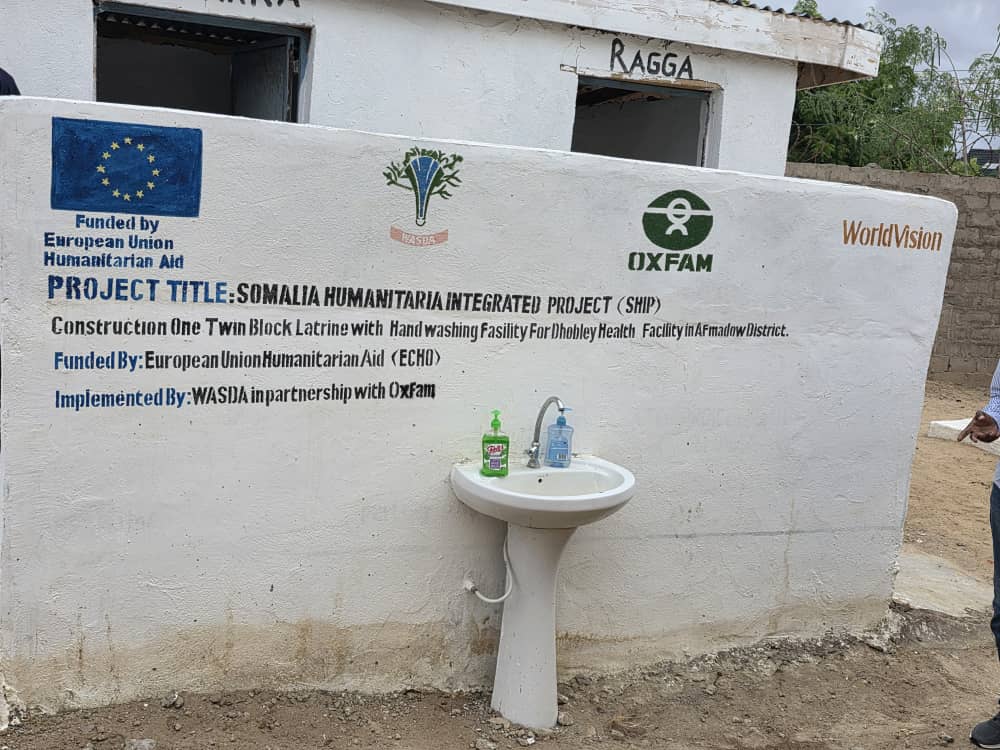
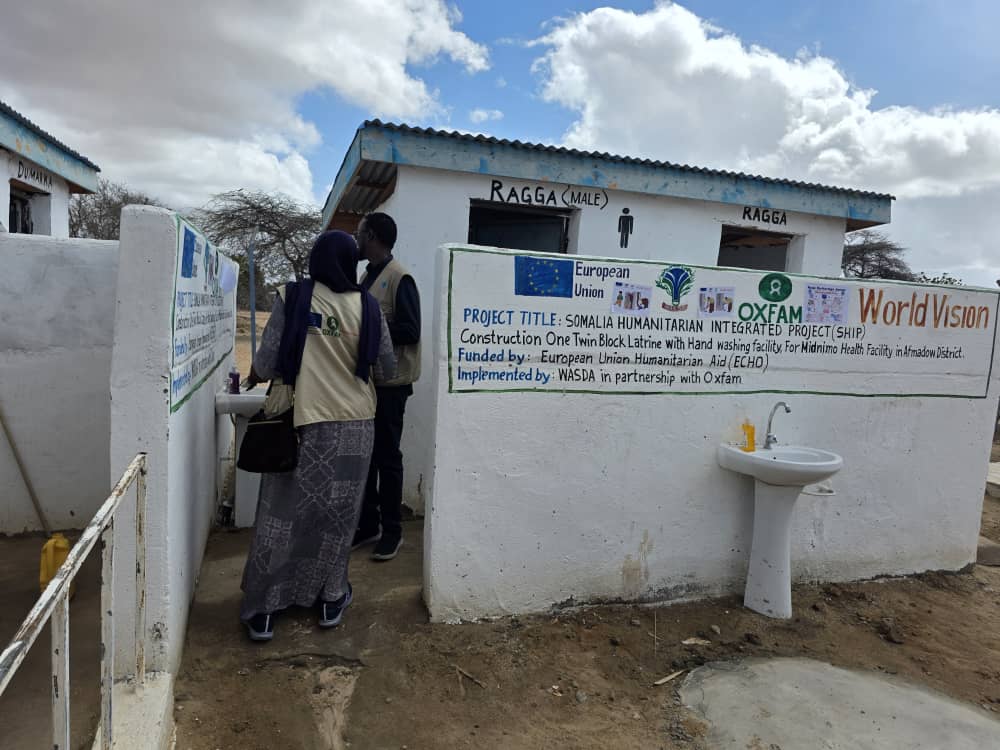
In partnership with WASDA, Oxfam supports WASH services at Waberi Health Facility in Afmadow town and at Midnimo and Dhobley Health Facilities in Dhobley.
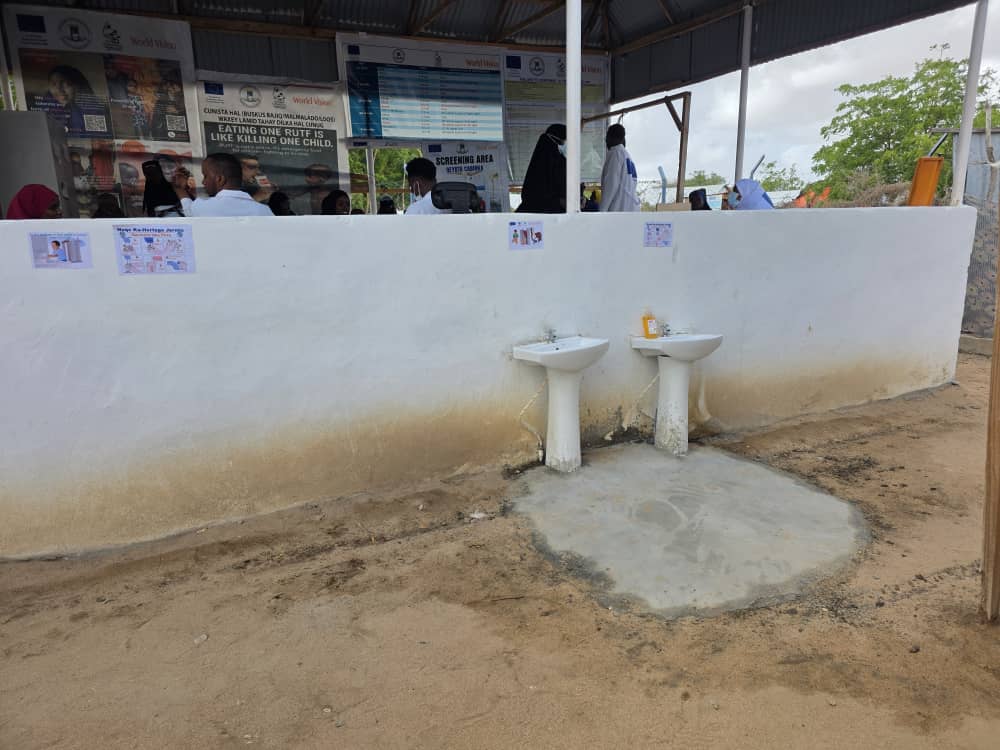
The interventions are improving access to safe and reliable water, sanitation facilities, hygiene promotion, infection prevention and control, and healthcare waste management.
These services are essential for reducing public-health risks and maintaining safe and dignified conditions within healthcare facilities. They also support health workers in delivering quality care to people affected by humanitarian crises.
A recent monitoring exercise conducted between 31 August and 2 September 2026 confirmed that the supported WASH facilities and services at all three health facilities were functional and contributing to safer healthcare environments.
Health facility staff, community representatives and Community Hygiene Promoters highlighted the value of the interventions for patients, caregivers, health workers and surrounding communities.
Linking facilities with communities
SHIP II’s integrated approach recognises the close relationship between community WASH conditions and the pressure placed on healthcare services.
Although progress has been recorded at the three supported health facilities, consultations identified significant unmet WASH needs in surrounding communities. These needs are particularly acute in settlements hosting internally displaced families.
Limited access to safe water, sanitation and hygiene services increases people’s exposure to preventable diseases. It can also place additional demand on health facilities already serving communities affected by displacement, drought and other shocks.
The findings demonstrate the importance of connecting facility-based improvements with sustained assistance at the community level.
Sustaining progress in Lower Juba
SHIP II partners will use the findings to inform continued implementation, strengthen coordination and respond to gaps identified by health workers and communities.
Through funding from European Union Humanitarian Aid, the consortium continues to strengthen essential health, nutrition and WASH services for crisis-affected communities in Somalia.